
The Season
The season after Pentecost is called “ordinary time,” but not because it is unimportant. The term comes from the Latin ordinalis, meaning “ordered” or “numbered,” and indicates that the weeks are counted. It is a time for the Church of the Triune God to renew its global mission. Several major feasts are celebrated during this time, beginning with Trinity Sunday. After celebrating the gospel of God from Christmas to Pentecost, the Church observes the first Sunday after Pentecost as a time to focus more intently on the God of the gospel. The God who sent the Son and the Spirit eternally exists as Father, Son, and Holy Spirit—“one God in Trinity, and Trinity in unity” (Athanasian Creed). All Saints’ Day is celebrated on November 1 to honor the saints of the Church, past and present, especially those who do not have their own feast day. On the final Sunday of the Church Year, some traditions observe the Feast of Christ the King, a final reminder of Christ’s universal sovereignty before the Christian New Year—the First Sunday of Advent.
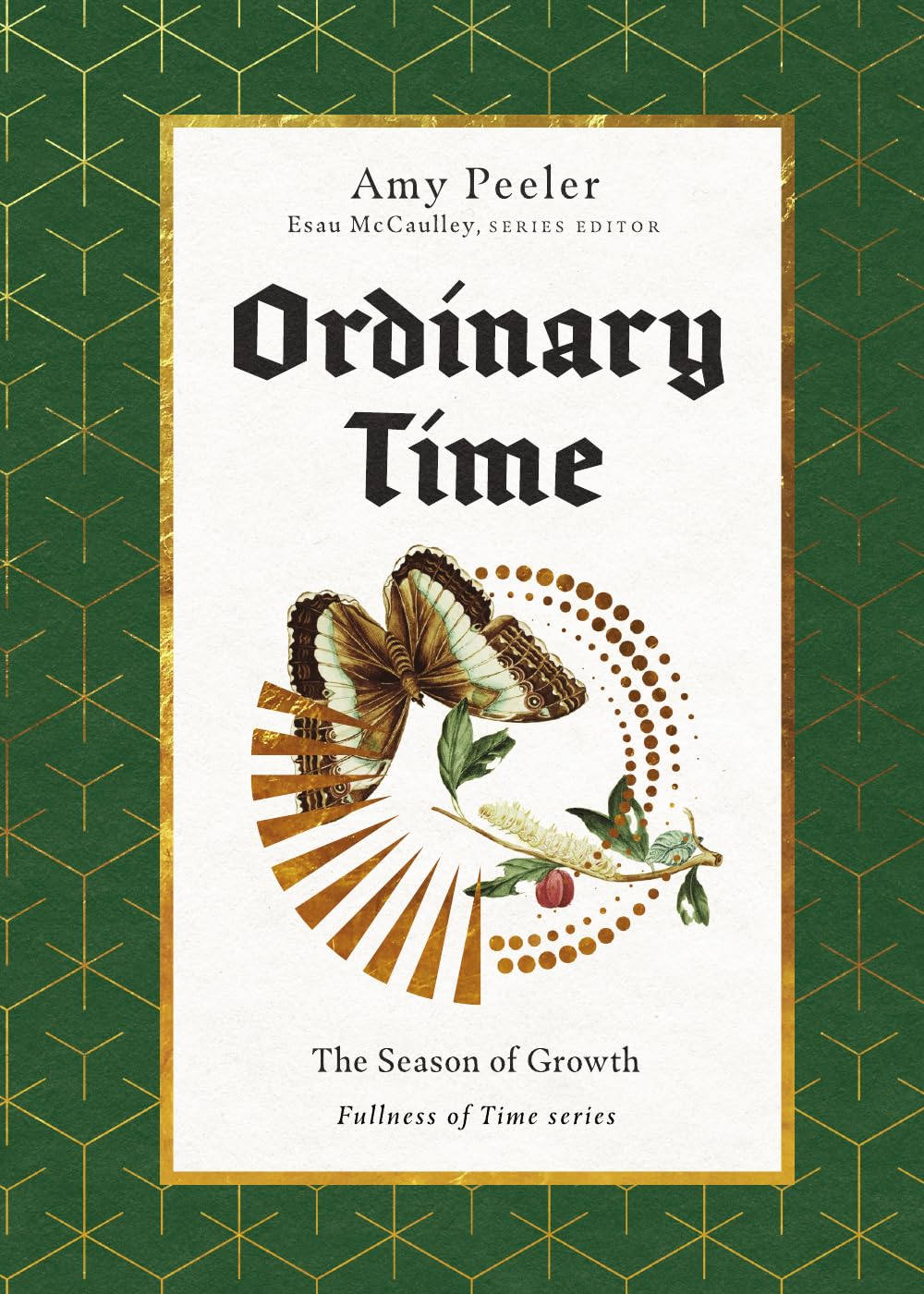
For more information, see Ordinary Time: The Season of Growth (IVP Formatio, 2026).
Color and Decorations
Green is the color of ordinary time. Green, the color of life and growth, signifies the life and growth that comes in the Church as a result of Christ’s coming and the Spirit’s descent. White is used on Trinity Sunday, All Saints’ Day, and Christ the King Day.
- Green overlay for communion table — Green Trinity Cross Overlay Cloth
- Purple scarf/overlay for pulpit — Maltese Jacquard Green Scarf
- Bookmark for lectern Bible — Green Maltese Jacquard Custom Bookmark
- Green banners to hang on walls — Maltese Jacquard Banner – Green
- Banner hangers — Banner hanger set
- Green vestments — Green Stole with Fringe
- Green tie for less liturgical churches — Grosgrain Solid Hunter Green Tie
Worship Resources
- Calls to Worship for After Pentecost (or Any Time)
- Collects and Readings for After Pentecost — prayers and Scripture readings
- Hymns, Songs, and Metrical Psalms for After Pentecost (or Any Time) — organized by fittingness for various parts of the service
Preaching
- Depending on the date of Easter, there are 23–28 Sundays in Ordinary Time After Pentecost (nearly as many as in all the seasons prior).
- Some churches use this as an opportunity to preach series on books of the Bible.
- Others continue to follow the Lectionary (which contains many continuous readings through large portions of books).
- For a simplified liturgy that accommodates lectio continua, see Service of the Word and Lord’s Supper (Simplified for Lectio Continua in Ordinary Time).
- See the articles, “Why Every Pastor Should Preach Through Whole Books of the Bible,” and “How Every Pastor Can Begin Preaching Through Whole Books of the Bible.”